
Jul 16, 2026
Why Desire Begins Before the First Bite
If your dinner table isn’t awakening desire, you are doing it wrong.
Modern life has reduced the act of eating to a transactional and rushed necessity. We seem to have forgotten that what we put into our bodies, and the environment we create to receive it, carries the power to unlock states of arousal. Pleasure, it turns out, can have a seat at the table. And no one understood this better than Cleopatra.

HOW TO SWALLOW AN EMPIRE
There is a fine line between a feast that merely fills a room and one that completely alters its frequency. Mark Antony understood the former, famously staging banquets and other displays of wealth to assert his power. But Cleopatra had mastered the latter.
The year was 41 BC. When she sailed into the city of Tarsus to meet the most powerful general in Rome, she arrived on a richly decorated vessel with her attendants. It is said that the perfumes burning on board were so dense that the crowds gathered on the riverbanks simply to inhale the air that preceded her. For her, this was not a diplomatic meeting with Mark Antony. She had something else in mind.
To ensure his absolute attention, Cleopatra staged an enormous banquet. In her world, an elite feast was never a casual meal. Every detail carried meaning: the synchronized movement of servants, the music played without pause, the incense burned in specific combinations to shift the mood.
An array of courses was served: roasted meats, warm spices, ripe figs, honey. Mark Antony consumed it all. He was a man so famously voracious that he once had eight wild boars roasted for a dinner party of just twelve guests. Yet, despite the opulence around him, he remained skeptical. Cleopatra had wagered ten million sesterces on that single evening - a fortune large enough to pay the annual wages of ten thousand Roman soldiers - and Mark Antony was questioning if that feast could truly justify Cleopatra’s claim of hosting the most expensive banquet in history.
Then it happened: she ordered a cup of vinegar to be placed before her. Without breaking eye contact, she detached a colossal pearl from her ear and dropped it into the liquid. The pearl softened, dissolved. Like a secret fading into the night. And when it was gone, she drank the whole cup. In a gulp, Cleopatra won the bet.
That banquet in Tarsus was the opening line of a love affair and a political alliance that would reshape the ancient world. Night after night, they dined together, each feast more deliberate than the last. The queen of Egypt wasn’t just feeding Mark Antony’s big appetite, she was feeding him a world he didn't know existed. And that, too, was seduction.
THE MIND HAS ITS OWN APPETITE
What happened in Tarsus is what modern science is finally beginning to name.
The field of neurogastronomy explores how the brain constructs the experience of flavor: not in the mouth, but almost entirely in the mind. Smell, memory, expectation, atmosphere and the presence of other people all modify what we taste before a single bite touches the tongue. Neuroscientist Gordon Shepherd, who coined the term and wrote the book “Neurogastronomy: How the Brain Creates Flavor and Why it Matters”, describes flavor as an image the brain creates. His argument is simple: we don't taste with our taste buds, we taste with our entire nervous system.
ENTER APHRODISIACS
Ancient cultures across the world all maintained lists of foods believed to stir desire: oysters, figs, honey, raw cacao, saffron. The word "aphrodisiac" itself comes from Aphrodite, the Greek goddess born from sea foam, which is why the oyster's oceanic flavor was long thought to carry her essence.
Mythology aside, the nutritional facts speak for themselves. Oysters, for instance, are rich in zinc, a mineral essential to testosterone production. Raw cacao contains phenylethylamine, often called the love chemical. And saffron has been studied extensively for its effects on mood and desire.
These ingredients don't just please the palate, they actively signal your nervous system that it is safe to melt into pleasure.

BUT IT’S NEVER JUST ABOUT THE FOOD
Ingredient chemistry, however, is only half the equation.
This is where the art of commensality takes over. The act of eating together. Humans have been doing it for nearly two million years: long before language, permanent shelter and any formal declaration of love, there was the shared meal.
Research consistently shows that eating with others increases enjoyment and elevates mood, independently of what is being served. A 2017 study from Oxford University found that the frequency with which people eat socially is one of the strongest predictors of life satisfaction and emotional wellbeing.
The table is one of our oldest vehicles for closeness and to eat together is to say: I am willing to be nourished in your presence.
PLEASURE DEMANDS YOUR ATTENTION
To unlock the sensory potential of dining, there must be a clear boundary between the noise of the day and the intimacy of the meal.
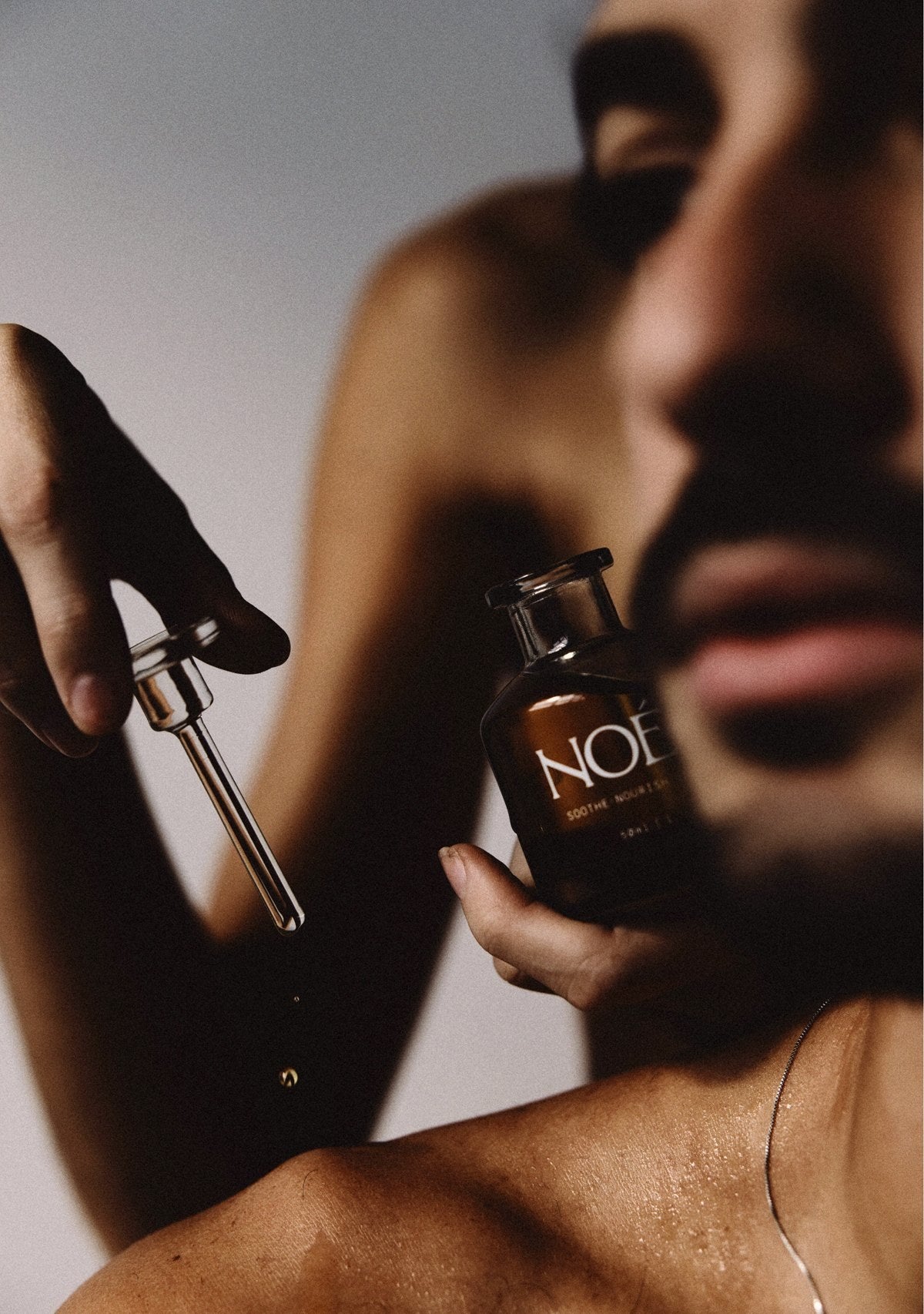
Whether dining alone or in the company of someone you love, the preparation matters as much as the menu itself. Shed the day and return to your body. Pour two drops of Nile Oil into your palms, rub them together, then inhale. Let that grounding scent remind you that you are here and that something worth receiving is about to unfold.
A meal doesn't begin when the food arrives. It begins when you decide how you want to feel. Nourished. Unrushed. Satiated. Alive.
Pleasure will be served.