The Chemistry of Attraction
In 2020, researchers at the University of Kent ran an experiment that sounds simple but reveals something profound.
They collected axillary sweat from women in two states: sexually aroused (after watching erotic content) and baseline (after watching a documentary about bridge building). Then they had men smell the samples in a blind test.
The results weren't subtle. Men consistently rated the scent of sexually aroused women as more attractive. More than that—exposure to these "sexual chemosignals" increased the men's own arousal and sexual motivation. The chemical signals of scent alone were enough to create a physiological response.
Your body is already fluent in a language you didn't know you were speaking.
It's called chemosignaling, and it's been happening long before we invented language. When you're calm, your skin releases oleic acid—a fatty acid that reads as warmth, ease. When you're aroused or deeply present, other compounds shift. People process scent through the olfactory bulb, which connects directly to the limbic system—the part of your brain that governs memory, emotion, and desire.
Which raises an uncomfortable question: What if some modern fragrances we layer on are interfering with signals that already work?
Synthetic musks were designed in the 1800s to mimic animal scent glands. They're inexpensive, they last forever, and they're in nearly every commercial fragrance. Iso E Super, Galaxolide, Hedione—they're not bad smells, but they're designed to project. They announce presence rather than amplify what's already there.
What if instead of adding more noise, you turned up your own signal?

This is where ancient practices got it right.
Cleopatra didn't wear parfum in the modern sense. The oils she used—blue lotus, moringa, myrrh—weren't designed to smell like flowers or vanilla. They were skin-like, warm, integrated. They smelled like a body that had been touched, like hair warmed by sun, like presence.
Blue lotus (Nymphaea caerulea) is mildly psychoactive and works as an adaptogen—it helps regulate cortisol, which means your natural scent profile stabilizes instead of spiking with stress. Jojoba is molecularly so close to human sebum that your skin recognizes it as its own. It doesn't sit on top—it absorbs, integrates, amplifies.
The result? You smell more like yourself. Just... louder.
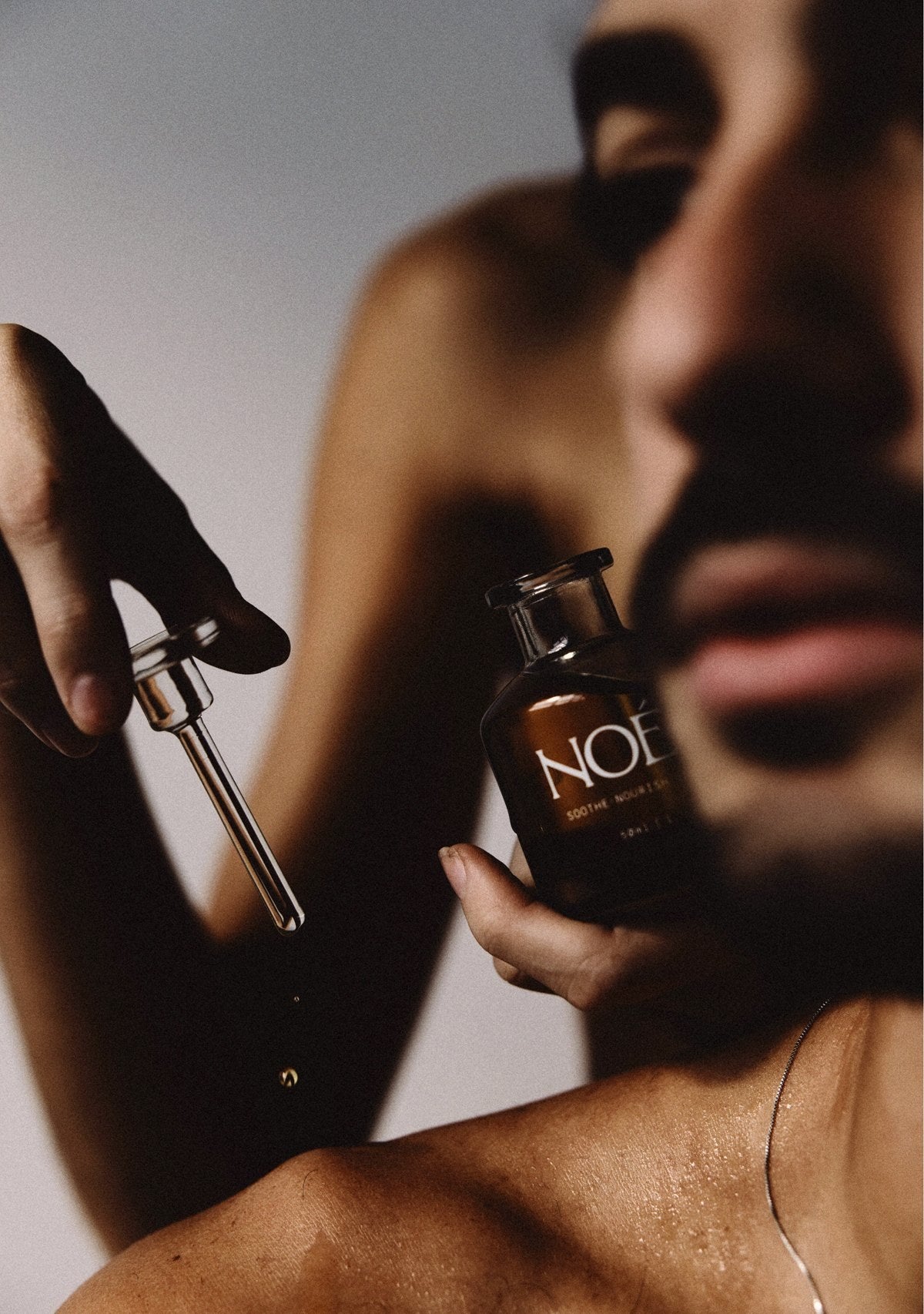
When we formulated Nile Oil, we didn't want it to "have a scent" in the conventional sense. We wanted it to work with your chemistry. The warmth comes from blue lotus and a base of jojoba, moringa, castor—but mostly, it reads as skin. Like the inside of someone's wrist after a long day. Like warmth pooled at the small of your back. Like the scent that lingers on a pillowcase.
Other research has shown that men exposed to follicular phase sweat reported greater subjective sexual arousal and increased likelihood to self-disclose—your body already knows when to speak louder. The question is whether you're letting it.
So what does this mean as Valentine's Day approaches?
The world will try to sell you on becoming someone else. A sweeter version. A cleaner version. A version that smells like everyone else wearing the same department store amber.
We're suggesting the opposite: become more yourself.
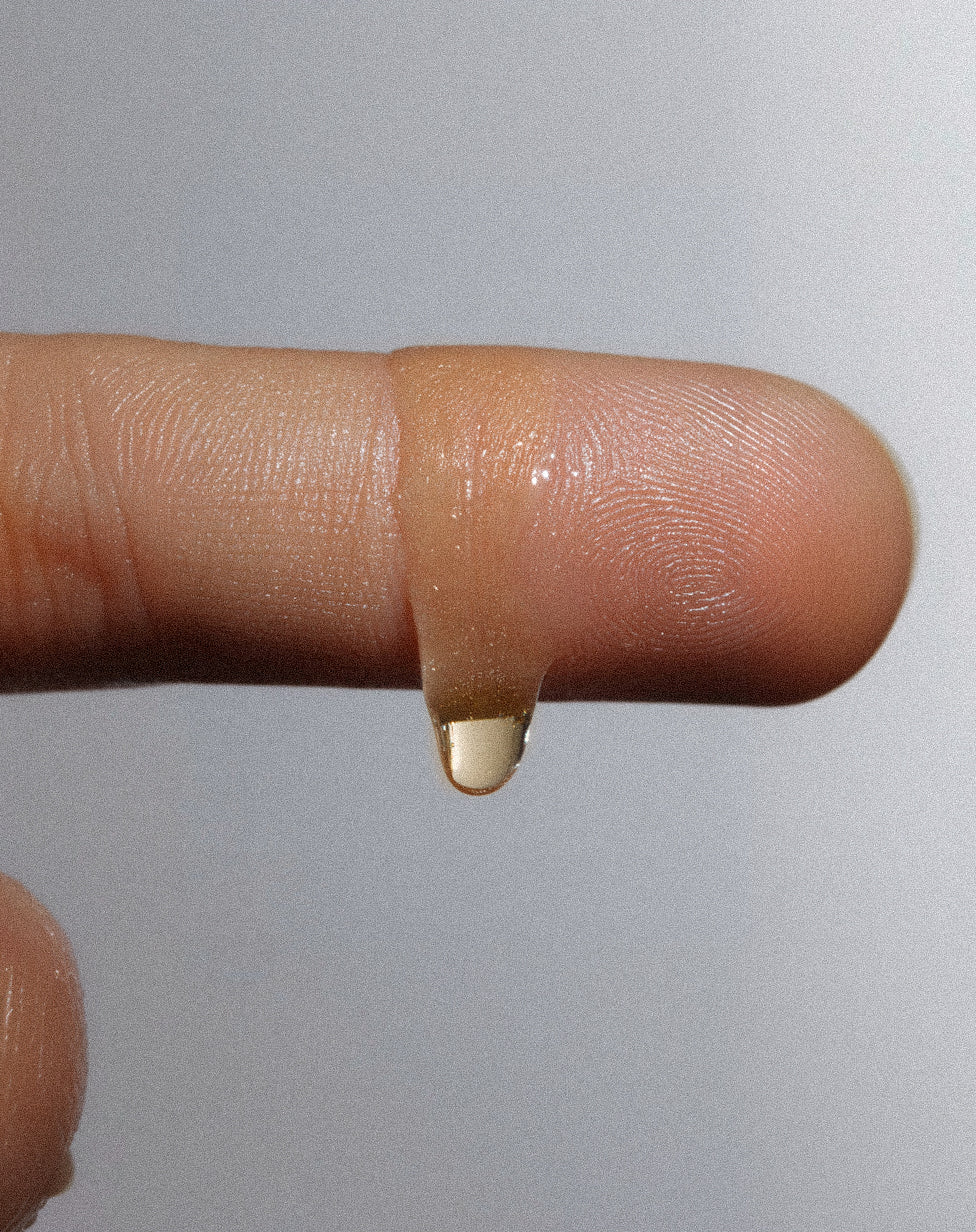
Try this experiment. For three days, stop wearing fragrance. Use Nile Oil on damp skin instead—pulse points, behind your knees, the small of your back where body heat concentrates. Warm it between your palms first. Let your chemistry do what it's been trying to do.
Then see who leans in closer. See whose attention shifts when you walk into a room. See what happens when your body gets to speak in its own language.
Because attraction isn't alchemy. It's chemistry. And yours is already working.
Read more

Two and a half million nerve endings. Four types of mechanoreceptors. A body designed to feel—and a culture that's forgotten how. We explore touch as medicine, Blue Lotus as awareness amplifier, an...

Her power was never her looks — it was presence. Inside Cleopatra's Blue Lotus ritual, and the science of the aura she cultivated.