
There's a passage in Proust's In Search of Lost Time where the narrator tastes a madeleine cake dipped in tea, and suddenly—without warning, without effort—his entire childhood unfolds. The grandmother's house. The streets of Combray. The feeling of Sunday mornings. All of it rushing back, not just as memory but as if he were reliving it.
Neuroscientists can explain that phenomenon. Unlike every other sense, that’s re-routed a few stops, smell takes a direct route to the limbic system—the part of your brain that processes emotion and memory.

This is why scent is the fastest route not just to memory, but to desire.
Odors travel directly to the amygdala and hippocampus, the regions related to emotion and memory. There's no rational filtering. No cognitive processing. A smell hits your nose and within milliseconds, you're somewhere else entirely.
This is what researchers call the Proust Effect—an involuntary, sensory-induced, vivid and emotional reliving of events from the past. But here's what makes it powerful for intimacy: the memories triggered by scent aren't just stronger. They're different.
Scent-cued memories are more emotional, include more relevant event details, and are especially self-relevant, arousing, and familiar. When you smell something tied to desire—skin warmed by sun, hair touched by oil, the inside of someone's wrist—your brain remembers it, yes, but it also recreates the actual feeling of it.
Why childhood scents stay with you
Smell is the only fully developed sense in the womb, and it remains the most developed sense in a child through around age 10. This is why the scent of your grandmother's kitchen or your first love's cologne can stop you in your tracks decades later.
Because smell and emotion are stored as one memory, the olfactory associations formed early are the ones that last. Which means, the scents you wear now have the potential to become someone else's involuntary memory years from now. Smells have privileged access to unlocking memories compared to other senses like vision and hearing. This isn't just about nostalgia. It's about the architecture of attachment—how we learn to associate scent with safety, with desire, with the people who matter most.
What this means for the oils you choose
Most people think about scent as something you wear now—for a date, an event, a specific impression you want to make today.
But smell works on a different timeline. The oil you apply this morning under your perfume is creating the memory that will surface years from now when someone catches a similar note on a stranger's skin.
So finding an oil that works best on your skin, you have to pay attention to what becomes unmistakably you. Does it deepen on your skin? Does it linger in a way that enhances your natural aroma?
This is how scent deepens connection—not through novelty, but through recognition. When someone can identify you by scent before they see you, when they catch a trace of your oil on their own shirt hours later and feel a pull they can't quite name, that's not romance in the Valentine's Day card sense. That's neural architecture. You've become encoded in their limbic system.
Why you should think of scent in the long-term
This requires something most people don't do: staying with a scent long enough for it to accumulate context. The fragrance that feels revelatory in a store often loses its power after the third wear. A true signature does the opposite—it deepens with repetition. It becomes the through-line in someone else's memories of you.
The question isn't "what do I want to smell like today?" What if we thought about it like, "will I hold someone’s memory five years from now when they smell this?"
Blue lotus works as a signature precisely because it doesn't compete for attention. It's subtle enough that your skin chemistry shapes it—warmer on some, more grounding on others—but distinctive enough that once someone associates it with you, they'll recognize it anywhere. Slightly earthy. Neither sweet nor sharp. The kind of scent that doesn't announce itself in the first conversation but lingers in the third.
And then there's consistency. Because smell and emotion are stored as one memory, the scent that becomes yours is the one you return to. The one that gets layered into specific moments: mornings together, hands held in taxis, the way you smelled when you said something that changed everything. Each repetition doesn't dilute the association—it strengthens it. This is why couples often describe being unable to smell their partner's scent on clothing without feeling a physical pull. The neural pathway is that established.
Scent as the language of longing
There's a reason certain smells—jasmine in a specific city, the ocean at a particular beach, someone's pillowcase—can make you ache with something you can't quite name. Scent-evoked nostalgia has an even more positive emotional profile than nostalgia elicited by other means, with individuals reporting lower levels of negative or ambivalent emotions.
Desire isn't just about the present moment. It's about the accumulated weight of every time that scent appeared—every touch, every conversation, every instance of proximity. Your brain stores all of it, and scent is the key that unlocks it without asking permission.
This is why the oils you wear matter more than you think. They're not just layers of fragrance. They're becoming part of someone else's involuntary memory system. Part of how they'll feel when they think of you years from now.
Choose accordingly.
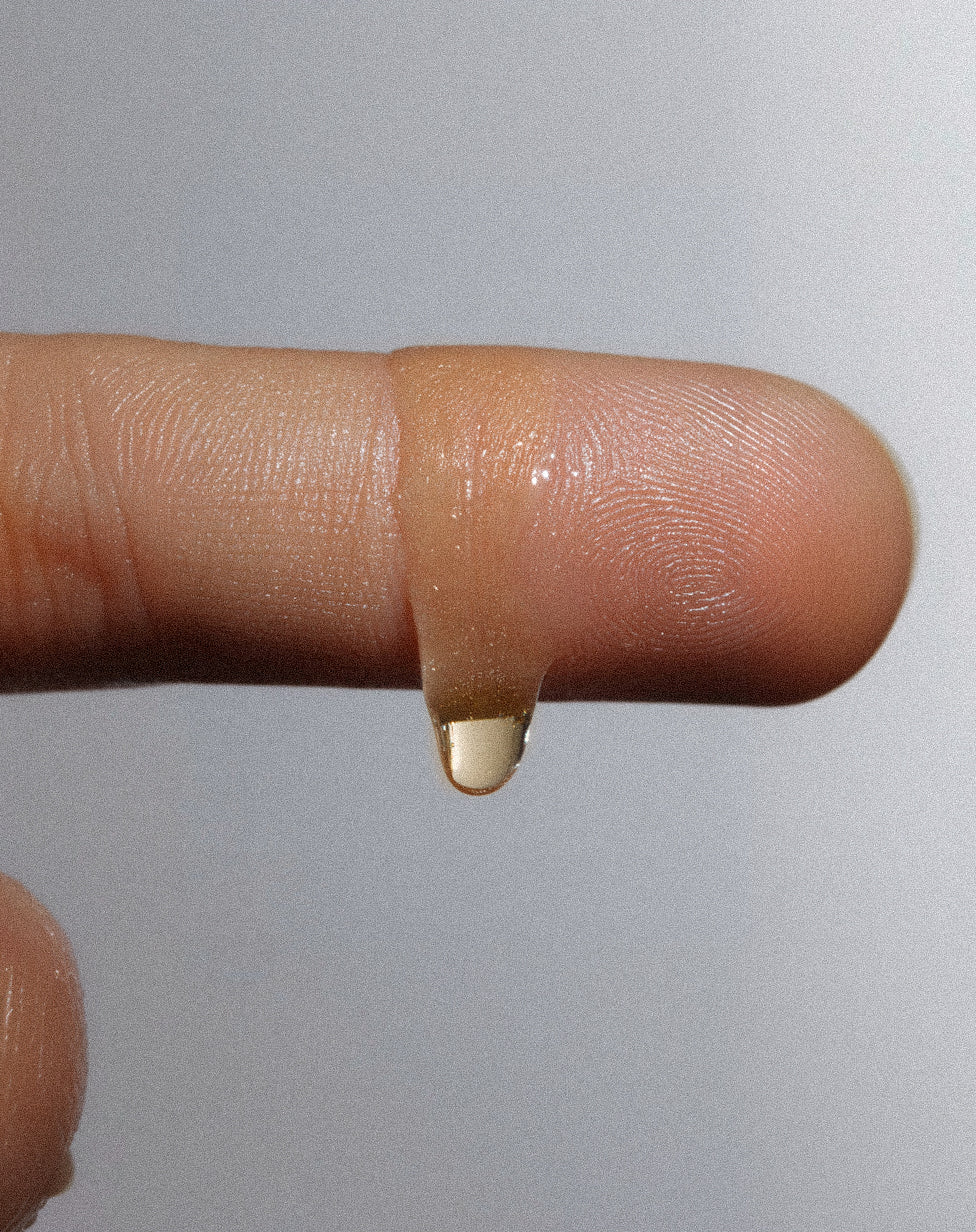
Warm Nile Oil between your palms. Apply it where heat concentrates—pulse points, the small of your back, behind your knees. Let it absorb. Let it integrate with your chemistry rather than cover it.
And then let time do what it does: turn scent into memory, and memory into longing.