
Jul 10, 2026
What Cleopatra Knew About Allure
Cleopatra ruled Egypt for over two decades. She spoke several languages, commanded a navy, and held her own alongside the most powerful men of the ancient world — Julius Caesar and Mark Antony among them.
Yet what made her magnetic wasn't her power or her position. It was presence. An unshakable, cultivated presence that spoke straight to the subconscious and drew people toward her. It lived in the architecture of her voice, the deliberate rhythm of her movements, and the reverent way she treated her own body in private — an invisible aura of desire she carried into every room.

SEDUCTION STARTS WHEN NO ONE'S WATCHING
True allure has little to do with how you look. It lives in the cadence of how you speak, how you move, and above all, how you treat yourself when no one is watching.
Cleopatra understood that allure isn't something you're born with — it's something you cultivate, deliberately, every single day. She mastered the art of being entirely present within herself, choosing self-reverence over external validation. That devotion created an atmosphere around her that bypassed beauty and intellect altogether, reaching people at the level of instinct.
Her radiance wasn't the cause. It was the overflow — the visible trace of how deeply she tended to herself.
CLEOPATRA'S SECRET WAS A FLOWER
To reach that kind of presence, you first have to quiet the noise of the mind. Cleopatra's secret for settling the nervous system was the Blue Lotus (Nymphaea caerulea), a water lily native to the Nile delta.
The ancient Egyptians revered it for the way it moved with the sun: its petals opened with the first morning light and closed at dusk, rising and sinking on the surface of the river like a sacred compass. They read this daily bloom as a living metaphor for rebirth, and the flower became one of Egypt's ultimate symbols of creation.
Its significance is hard to overstate. When Tutankhamun's tomb was opened in 1922, researchers found Blue Lotus everywhere — carved into the wooden objects, and preserved as real botanical remains frozen in time for over three thousand years. Dried petals were woven into the funerary garlands adorning the young king, and loose ones lay scattered across the antechamber floor: a final offering to guide him safely into the afterlife.
But the Blue Lotus was never confined to the tomb. It was just as central to the Egyptians' rituals of intimacy, prized for its heart-opening, aphrodisiac reputation. Raw blossoms were steeped in jars of wine to make a mildly euphoric elixir, shared at banquets to loosen inhibition and deepen connection.
And then there's the scent — earthy, subtly erotic, the kind of aroma that quiets a racing mind while sharpening every sense. Cleopatra held this close. When she emerged from her private chambers, she didn't simply smell beautiful; she arrived with an entire atmosphere. She used the Blue Lotus to draw others near and to mark the space around her body as sanctuary.
AND YES — THERE'S CHEMISTRY
Modern science is beginning to name what Cleopatra already knew. The Blue Lotus contains two compounds that work in tandem to shift our inner state. Apomorphine works on the mind, easing anxiety and loosening the grip of overthinking. Nuciferine works lower, in the body, a gentle relaxant that softens physical tension. Together they perform a kind of botanical choreography — drawing you, fully, into the present moment.
ANOINT LIKE A PHARAOH
When you treat your body as sacred, the world responds to your energy. True allure was never about adding more or becoming someone else. It's about fully inhabiting the body you're already in — with devotion, with love, tenderly and without rush.
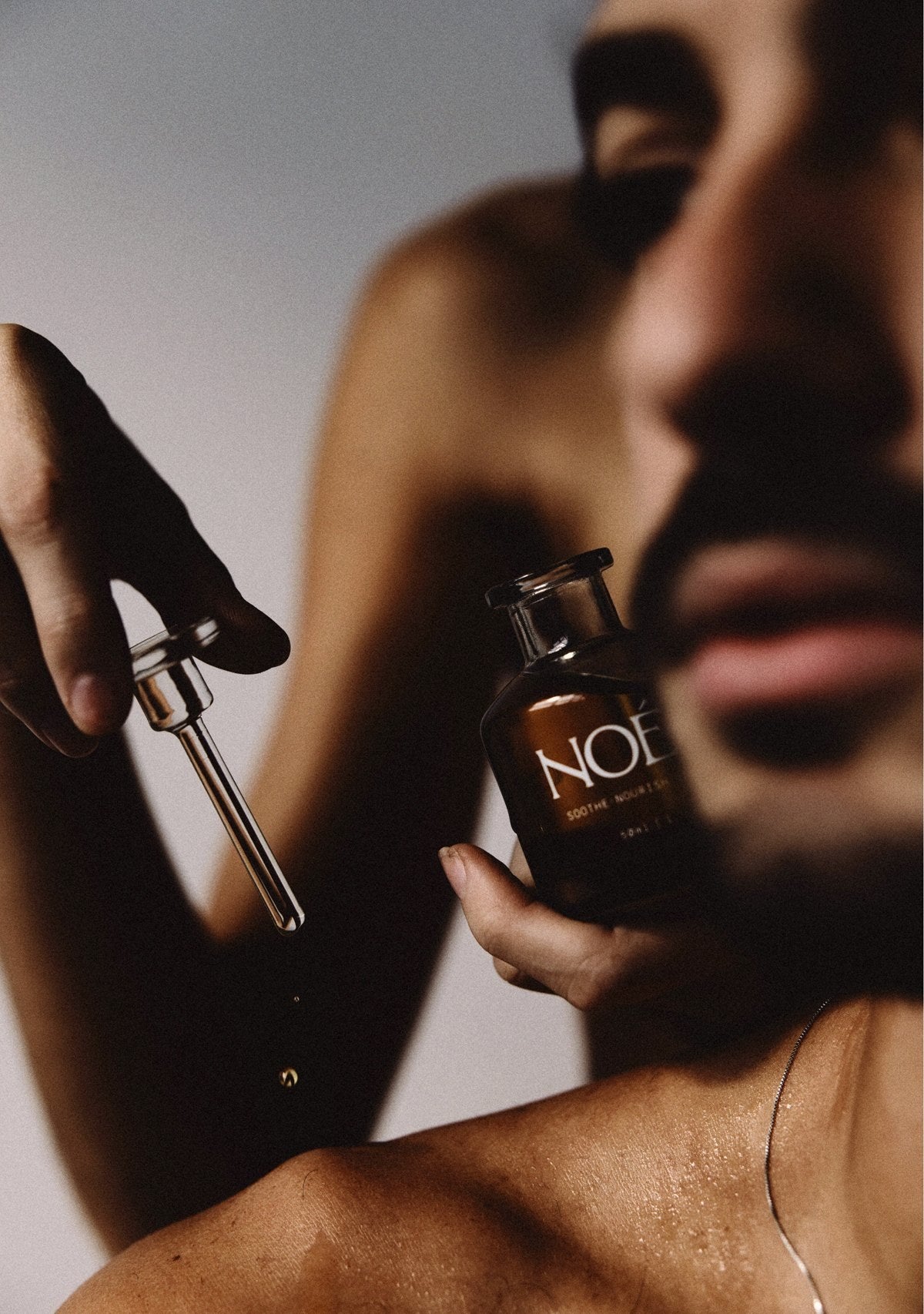
We built the Nile Oil around exactly this ritual. A multipurpose organic elixir infused with responsibly sourced Blue Lotus, it draws on the same anchor at the heart of Cleopatra's mystery. You're not applying an oil. You're anointing yourself — reaching for the same sovereign presence that once commanded the ancient world.