
Nov 10, 2026
Beauty for Eternity: How Ancient Egyptians Prepared for the Afterlife
What would you take with you if beauty had to last forever? Thousands of years ago, in ancient Egypt, the answer could include jars of scented oils, cosmetic palettes, polished mirrors and precious adornments.
Beauty, for the Egyptians, was not simply confined to earthly life: the body had to be made ready for its next existence and the rituals, ointments and objects used in those preparations were carefully chosen.
What the Egyptians carried into eternity
Today, particularly in the West, we tend to think of beauty as something that belongs to the living, strongly associated with appearance, youth and the physical self. In Egyptian antiquity, those ideas existed too, but beauty carried another dimension: it was a manifestation of divine power and fertility and it was deeply tied to protection, regeneration and the possibility of life after death.
Beauty lived in the ordinary and women and men of all social standings would have engaged in some form of beauty ritual. Makeup, for instance, was worn often and served aesthetic, practical and spiritual purposes. Kohl, perhaps the most iconic of Egyptian beauty preparations, illustrates this particularly well: the dark pigment traced around the eyes to accentuate them was believed to ward off harmful influences while offering protection against the harsh sunlight, dust and even infection in arid climates.
But beauty extended beyond the living body. So what came next? Alongside jewelry, clothing, food and other personal possessions, archaeologists have found an extraordinary collection of beauty objects inside tombs: cosmetic vessels, ointment jars, mirrors… Cosmetic palettes from around 4000 BCE, recovered from Predynastic graves, were used to grind mineral pigments for eye makeup and some still bear traces of the color. Their presence in tombs also carried symbolic significance, as the eye paint was believed to be needed to restore the deceased’s eyesight.
In later periods, ointment jars, kohl applicators and mirrors also appear among funerary objects. These were not simply remnants of a beauty routine, but familiar belongings considered valuable enough to accompany their owners into the unknown, as they reflected the belief that the deceased would continue to have needs, habits and an identity in the afterlife.
So in death, as in life, the body remained worthy of adornment and care.

The role of oils
Many of those small jars and vessels found in Egyptian tombs carried the same thing: oils. Used throughout life and smoothed from head to toe, they kept the skin nourished and protected from the dry climate.
Common oils came from almonds, castor seeds and moringa, and also provided a base for fragrant preparations with ingredients such as myrrh and frankincense, which were worn often and offered to the gods in temples. What this tell us is that personal care, religious offering and temple ceremony were never far apart and the same oils moved easily between them.
Then we have the rituals surrounding burial, with oils and ointments becoming part of the preparations for eternity: during the embalming process, the body and its linen wrappings were treated with special substances, including fragrant oils, fats and resins, and each had its own purpose, from anointing and ritual purification to helping preserve the body.
Take the cosmetic box belonging to Kemeni, a royal official who lived during Egypt's Middle Kingdom, around 1814–1805 BC: crafted from cedar wood, with ebony, ivory and silver details, it was originally designed to hold eight small jars, believed to have contained sacred oils used in funerary rituals. Of all those rituals, one stands out: the Opening of the Mouth, an ancient funerary practice intended to restore the deceased's senses and ability to see, hear, breathe and speak in the afterlife. The body was first cleansed, then anointed with oils to be made pure and ready for a divine existence.

The beauty of being remembered
What these rituals reveal is how little they separated the physical from the spiritual. The body was something to prepare and preserve, always, and fragrance, touch and adornment also played and important role in ancient Egypt.
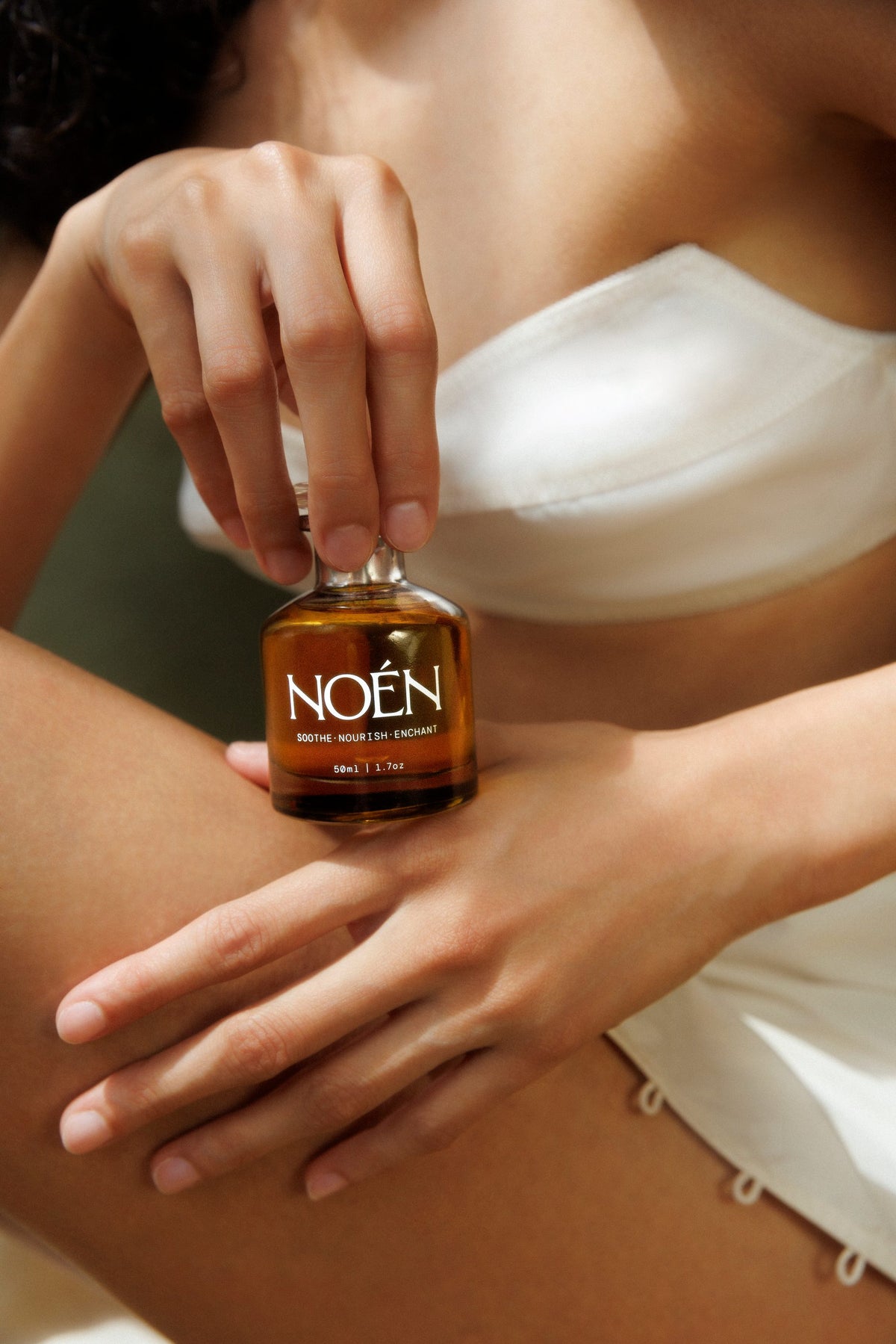
Today, the idea of beauty for eternity may feel distant, belonging to another understanding of existence. Yet the gestures themselves are familiar: warming an oil between the palms, touching the skin, carrying a signature scent. Our botanical Nile Oil, inspired by ancient Egyptian rituals and the act of anointing, begins exactly here, in these gestures, in these are small acts through which we inhabit the body, mark a moment and give meaning to the everyday.
So what would you take with you if beauty had to last forever?
Multi-purpose elixir with eleven botanicals for body, hair and skin. Dermatologist-approved, gynecologist-tested.