Frankincense: What It Smells Like, and Why It's in Dawn
Some ingredients at Noén come with a long history. That's the case of frankincense.
Used for thousands of years in ritual and perfumery, this dry, aromatic resin has moved through temples and traditions across centuries and found its way into Dawn. It smells like dry wood, cut pine and citrus peel, with a faint sweetness underneath — but that plain description undersells a material that has been burned in nearly every major religion on earth.
Here's why frankincense has endured, and why we chose it for our inaugural fragrance study, inspired by the botanical, oil-based perfumery of ancient Egypt.

So, This Is a Resin…
Also known as olibanum, frankincense is an aromatic resin obtained from several species of Boswellia trees, which grow naturally in some of the driest regions in the world, from the Horn of Africa to the Arabian peninsula. Around thirty Boswellia species exist, though only a handful produce resin of perfumery quality.
At Noén, Boswellia sacra is the one we use to source the frankincense oil found inside Dawn.
The resin is harvested through small incisions made in the bark of the tree. A sticky substance begins to emerge, pale and delicate at first. Then, when exposed to the air, it starts to harden, forming the milky-white or amber-coloured pieces traditionally known as frankincense "tears."
On its own, the resin is almost unassuming. But give it heat and everything changes.
… A Precious One…
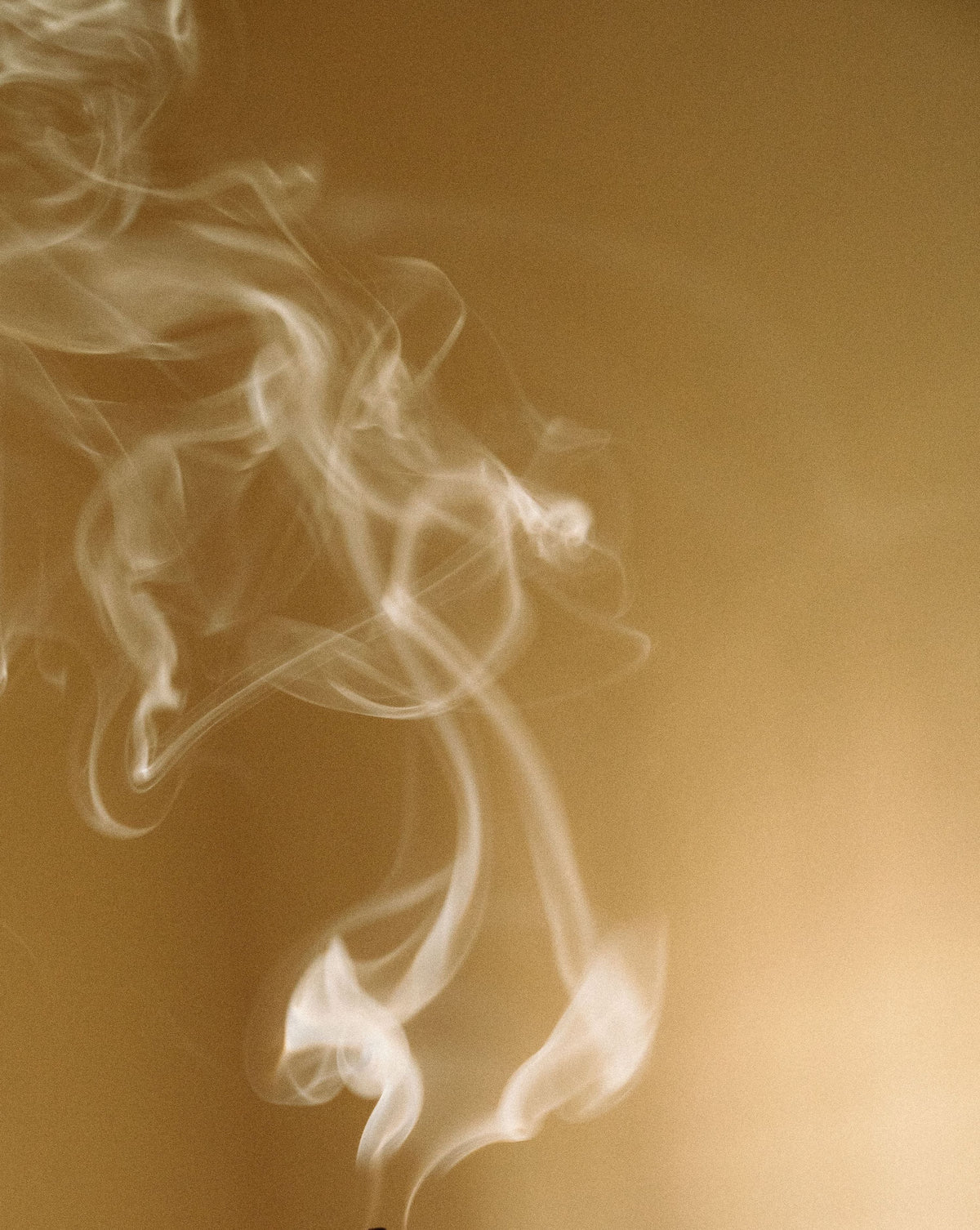
Historically, frankincense was most closely associated with burning, and became especially valued for the fragrant smoke it released.
It was also, for most of recorded history, expensive. UNESCO describes frankincense as "one of the most important luxury items of trade in the Old World in Antiquity," moving along routes that connected the Mediterranean and the Red Sea to Mesopotamia, India and China. Entire cities existed to move it. In Oman, the Land of Frankincense is a World Heritage Site precisely for this reason — it takes in Wadi Dawkah, where Boswellia sacra still grows; Shisr, a caravan oasis in the desert; and the ports of Khor Rori and Al-Baleed, where the resin left by sea.
In ancient Egypt, where scent had practical, ceremonial and symbolic uses — something we've written about in what the Egyptians knew about wearing scent by the hour — frankincense arrived as a prized import. It was burned in temples, blended into compound incenses such as kyphi, and used in preparations for the body, in purification and in funerary rites.
For thousands of years this resin travelled: across the Red Sea, along the incense routes, into medicine, into ceremony, and eventually into modern perfumery.
… And a Holy One
Almost every major religious tradition found its way to the same resin.
In the Hebrew Bible, frankincense — levonah — is named as one of the components of the ketoret, the incense compounded for the Temple. In Christianity, it arrives in the nativity as one of the three gifts brought to the infant Christ, alongside gold and myrrh, and it never really leaves: it still burns in the censers of Catholic, Greek Orthodox, Ethiopian Orthodox and Coptic liturgy today. Across the Arabian peninsula, luban remains a fixture of daily and devotional life, burned in homes and mosques, carried in clothing and hair.
Why this resin, across traditions that agreed on so little else?
Two reasons, and they're both worth sitting with.
The first is the smoke. Incense does something no other offering does — it rises. It is visible, and then it isn't. In a great many traditions the ascending smoke was understood as prayer made briefly perceptible, a way of carrying words from the floor of a temple to somewhere above it. Frankincense burns clean and pale and lifts well. It looks like what it was asked to represent.
The second is the cost. Frankincense had to be carried across deserts and oceans before it could be burned, and burning it destroyed it completely. That was the point. To put something that valuable on a fire and watch it disappear was a sacrifice in the most literal sense — value given up deliberately, with nothing recovered. Cheap incense could never have carried that meaning.
Sacred, in other words, was never only about the smell. It was about what the smell cost, and which direction it went.
… Full of Contrasts
Part of frankincense's longevity comes from its unusual aromatic profile.
So what does frankincense actually smell like?
Start with dry wood — not damp forest, but sun-warmed timber. Then fresh pine, green and slightly sappy, closer to a cut branch than to a cleaning product. Above that, a real citrus lift: lemon peel, a touch of bitter orange, brighter than most people expect from a resin. And underneath everything, a faint sweetness, almost milky, that keeps the whole thing from turning austere.
There's also a mineral quality that's harder to name — something faintly dusty, like warm stone, or the inside of an old building. It's the part that makes frankincense feel old even to people who have never knowingly smelled it.
The exact character shifts with the quality and origin of the resin. Some varieties are warmer and more balsamic, edging toward amber. Others are greener and sharper. Omani Boswellia sacra tends to be prized for a cleaner, more lemony brightness.
Most people expect frankincense to smell like church. It can — but that's the smoke, not the resin. Burned, it turns dense, sweet and slightly balsamic, the smell most of us have filed under "incense." Distilled into an oil and worn on skin, it's a different material entirely: drier, more transparent, far more citrus than you'd predict.
That range isn't a flaw. It's the whole reason perfumers reach for it. Frankincense resists being reduced to a single note, which is exactly what lets it move between parts of a composition — sitting at the top as a piney, citric lift, or settling into the base as dry warmth. Very few natural materials do both, and fewer still do both well.
And Dawn Wouldn't Be the Same Without It
Rose and jasmine shape Dawn with the feeling of first gold light on bare skin. Then comes frankincense, cutting through the sweetness, adding dryness, keeping the florals from becoming too perfect.
The resin creates warmth and depth without making the scent feel heavy. And like so many natural aromatic materials, its character shifts with temperature, composition and skin chemistry. What begins bright becomes softer and closer to the body — part of how a fragrance becomes a signature scent rather than something worn on top of you.
That movement becomes even more intimate in a roll-on perfume oil. Suspended in Nile Oil rather than alcohol — no burn-off, no sharp opening — Dawn warms at the wrists, the collarbones, behind the ear, allowing the scent to unfold slowly and stay close.
Thousands of years ago, frankincense released its aroma through heat, and the smoke went upward. In Dawn, it still needs heat. Only now the warmth comes from the skin, and the scent stays exactly where it is.
Alcohol-free perfume oil with neroli, jasmine and frankincense. Suspended in Nile Oil.
Read more
On long-distance love, and the one thing that closes the gap faster than a photograph.
Twice a year, light and dark meet in fleeting alignment. We call it the equinox. The word itself comes from the Latin for "equal night." For one brief moment, day and night almost share the same le...