Sep 22, 2026
What the Autumn Equinox Teaches Us About Balance
Twice a year, light and dark meet in fleeting alignment. We call it the equinox.
The word itself comes from the Latin for "equal night." For one brief moment, day and night almost share the same length — almost, because the equinox never quite delivers a perfect twelve hours of each. It's a balance held in contrast: two opposing forces meeting without cancelling each other out.
Then the balance begins to tip, and from there each equinox marks a turning point: a shift in light, rhythm and season, as the natural world begins moving in a new direction.
For the autumn equinox — the fall equinox, as it's known across much of the US — that movement is inward. Darkness slowly starts to take more space, the nights lengthen, the air cools, and the season leans into a quieter, more reflective energy.

First, the Balance Shifts…
We tend to imagine balance as a permanent state of harmony. Work and rest, giving and receiving, movement and stillness. All of it in equal parts.
But the body has its own rhythm. Some days it asks for more sleep. Desire expands and retreats. Energy rises, fades and returns. There are moments to move outward and moments to turn inward.
We are not static bodies moving through an unchanged environment — our rhythms move with the season too. Researchers at Charité in Berlin found that people get around thirty minutes more REM sleep in winter than in summer, and concluded that we should adjust the length and timing of our sleep to the season rather than hold it constant all year. After all, nothing alive remains perfectly even.
Which is why the autumn equinox matters. It offers a different way of thinking about balance: not holding everything in perfect equilibrium, but allowing the weight to shift.
What needs more space now? What has been taking too much? What are we ready to stop carrying? And what do we want to welcome in for the colder months?
Then, the Pace Softens…
Symbolically, the autumn equinox sits between abundance and scarcity: summer has passed, but winter has not yet arrived. The sun's downward trajectory in the sky is already in motion, and this equinox marks its descent toward the winter solstice, the darkest point of the year.
The natural world begins its slow retreat. There is less expansion, more interior — and perhaps this is why the season can feel strangely intimate.
With less light and a slower rhythm, we may find ourselves more conscious of what is easier to ignore during summer: tiredness, appetite, solitude. But not everything needs to be pushed through. Some things only become visible when the pace changes — when we stop insisting on brightness as the only desirable state, and begin to respect the body's natural need to rest and recover.
And We Come Close to Ourselves
As the days start to feel different, small adjustments to routine can ease the transition into a new season.
Start by redistributing your energy in a way that feels sustainable. Perhaps that means carrying one gentle intention into the season — one thing you would like to make a little more room for, returning to it every so often without turning it into another hard rule to follow.
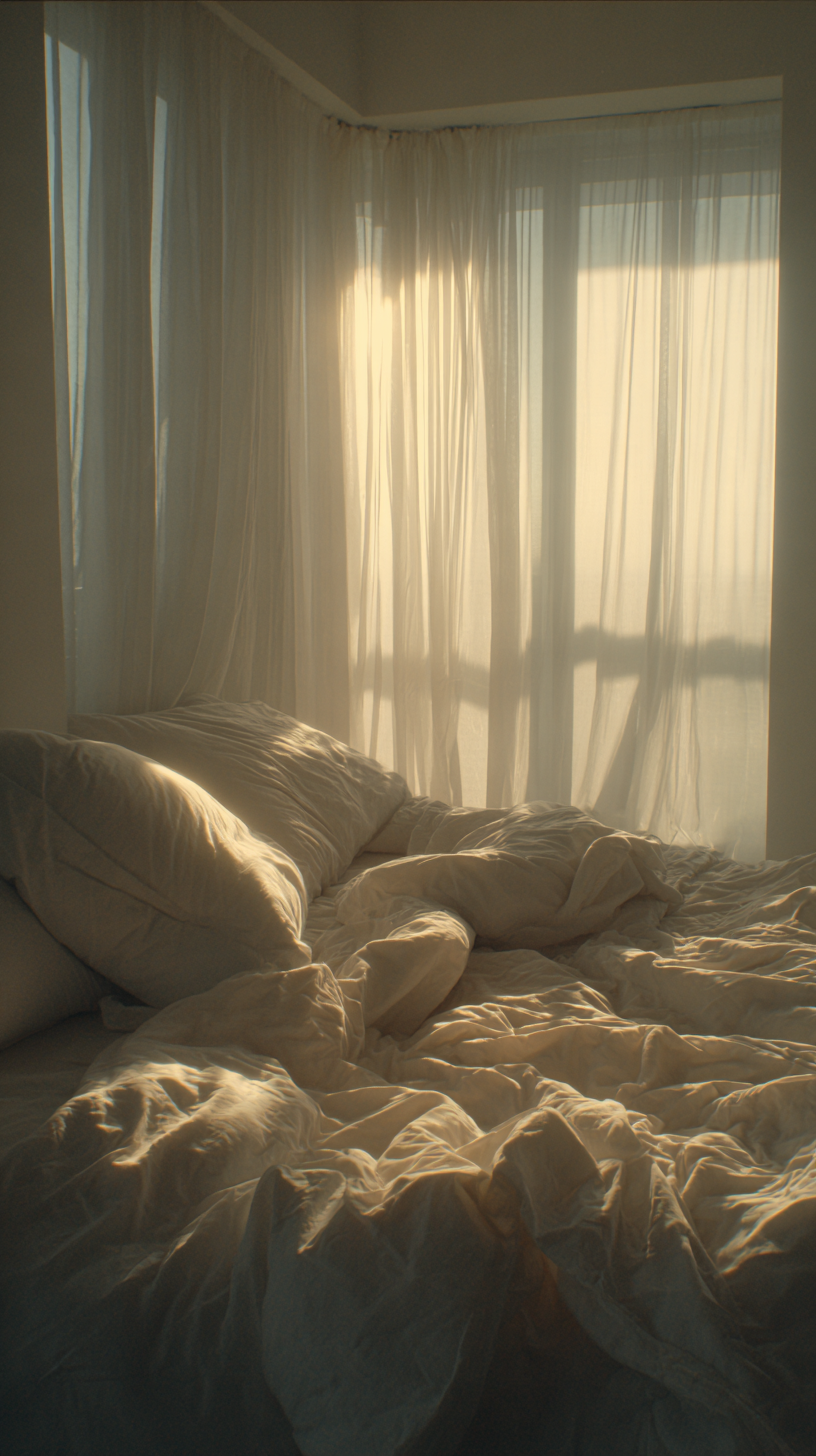
Or perhaps you let the day end differently: earlier, and with fewer things between you and your body. A wind-down fifteen minutes sooner can be enough. Dim the lights, step away from screens, and use that time to come back to yourself.
Warm a few drops of Nile Oil between your palms and press them slowly into the skin. If the body asks for scent, roll Eros Perfume Oil wherever instinct takes you — amber, labdanum and blue lotus, made for the longer nights. Return to it through the season, and it becomes part of how a fragrance turns into a signature scent.
Maybe balance lives here: in knowing when to move and when to soften, when to reach outward and when to return inward, when to let light in and when to leave something in the dark. When to let go, and when to linger.
Eleven botanicals for body, hair and skin. Dermatologist-approved, gynecologist-tested.