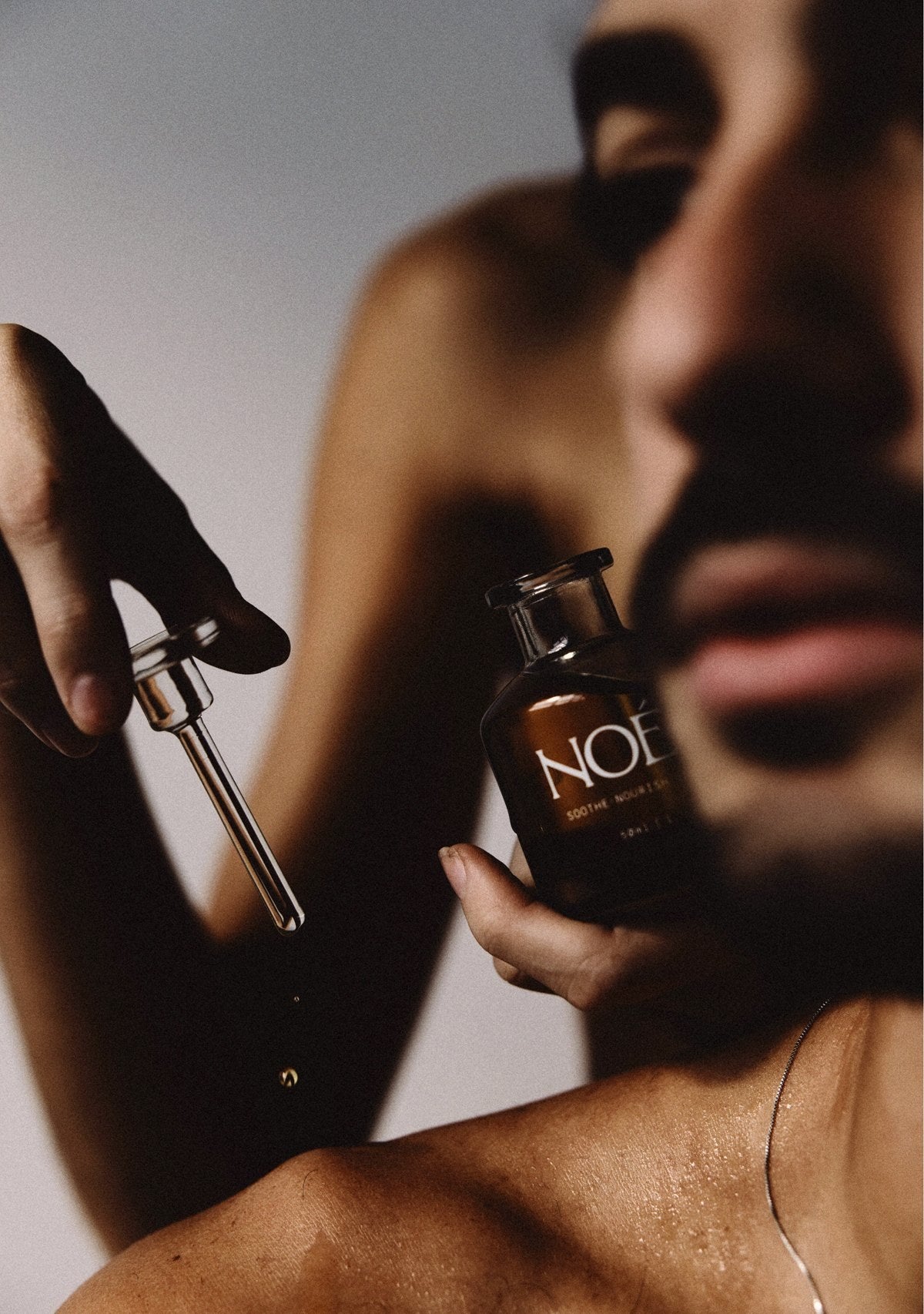
What the Egyptians knew about wearing scent by the hour
The temples of ancient Egypt ran on a timetable of smell.
Citrus and bright florals at dawn, when the day demanded sharpness. Dark resins and earth at dusk, as the light went and the body was meant to settle. Not perfume as decoration — perfume as instruction, burned at fixed hours the way a bell is rung at fixed hours.
The premise was that scent did something. That the right resin at the right hour changed how a room felt and how a body behaved in it. Egyptians held that scent carried the soul, and that the gods judged a soul by how it smelled. Nothing about that arrangement was casual, and nothing in it was chosen at random.
We kept the perfume and threw away the schedule.

What modern fragrance stopped doing
Most contemporary scent is built to project outward. Alcohol-based, engineered to fill a room, gone in a few hours. It sits on you like a garment — over the body rather than with it, never quite touching your own chemistry.
That works for what it's designed to do. But it means fragrance became something you put on for other people, at whatever moment you happened to be getting dressed. The hour stopped mattering. The intention stopped mattering. It became a finishing touch.
Which is a strange thing to have done with a material that, as it turns out, was doing more than we gave it credit for.
Faster than thought
In 2005, researchers at Radboud University ran an experiment that has been cited ever since. Participants sat in a room lightly scented with citrus cleaner — faint enough that most never consciously registered it. They were then given unrelated tasks.
The scented group thought about cleaning more readily than the control group. When handed a crumbly biscuit, they cleaned up after themselves at markedly higher rates. Asked afterwards, they had no idea the room smelled of anything, and no idea why they'd behaved differently.
The paper was called Smells Like Clean Spirit, and its finding is the useful one: the scent worked before anyone noticed it was there.
There's an anatomical reason. Every other sense routes through the thalamus first — a relay station that sorts and filters before passing signal upward. Smell doesn't. Olfactory neurons run more or less directly into the limbic system, into the structures handling emotion and memory. Scent arrives before the part of your brain that evaluates things has been consulted.
This is why a smell can put you somewhere you haven't been in twenty years, instantly and without permission. It's also why the Egyptians burning frankincense at dusk were not being decorative.
Certain notes, certain hours
Perfumers have worked with these associations for a very long time, and the groupings are consistent enough across traditions to be worth something.
Dense resins — frankincense, myrrh, cedarwood — have been burned for stillness in nearly every culture that had access to them. Citrus and green notes have been used, just as widely, at the other end of the day, for waking. Florals sit in between, and shift depending on what they're built with.
None of this is a prescription. It's a long, well-documented pattern of people reaching for the same materials at the same hours, across cultures that had no contact with each other. That is at minimum interesting, and at most a piece of practical knowledge we stopped using.
The one thing that changes it materially is the base. Suspended in alcohol, these materials lift and leave. Suspended in oil, they stay against warm skin and open slowly — which is how they were originally worn, and closer to how they were meant to work.
Dawn and Eros
We made two, for two hours.
Dawn is built for the part of the morning before anything is demanded of you. Rose and jasmine harvested before first light, green neroli through the middle, Blue Lotus underneath. Bright and just-washed, without being sharp.
Wear it on the wrists, the temples, the collarbones — before the notebook, before the screen.
Eros is the other end. Amber resin, velvet musk, sweet balsams and vanilla-dark woods, with the same Blue Lotus running under it. Warmer, closer, heavier. It smells like heat coming off skin some hours after midnight.
Wear it at the nape of the neck and the collarbones, worked in slowly, at the hour you're putting the screens down.
Both are suspended in Nile Oil rather than alcohol. They warm with your skin instead of evaporating off it, and they move as the hours pass rather than announcing themselves and receding.
How to wear it
The schedule is the whole idea. Pick by the hour rather than by habit.
-
Decide which part of the day you're in — the one that's starting, or the one that's ending.
-
Roll over the pulse points. Wrists, throat, the back of the knee. Anywhere close to blood is close to warmth.
-
Breathe in slowly, for a count of ten.
-
Roll again.
That's it. Four steps, thirty seconds, and the only real discipline is choosing on purpose instead of grabbing whichever bottle is nearest.
The Egyptians built temples around this. You can manage a wrist.
Dawn and Eros are available now. Both are suspended in Nile Oil and built around Blue Lotus.
Read more
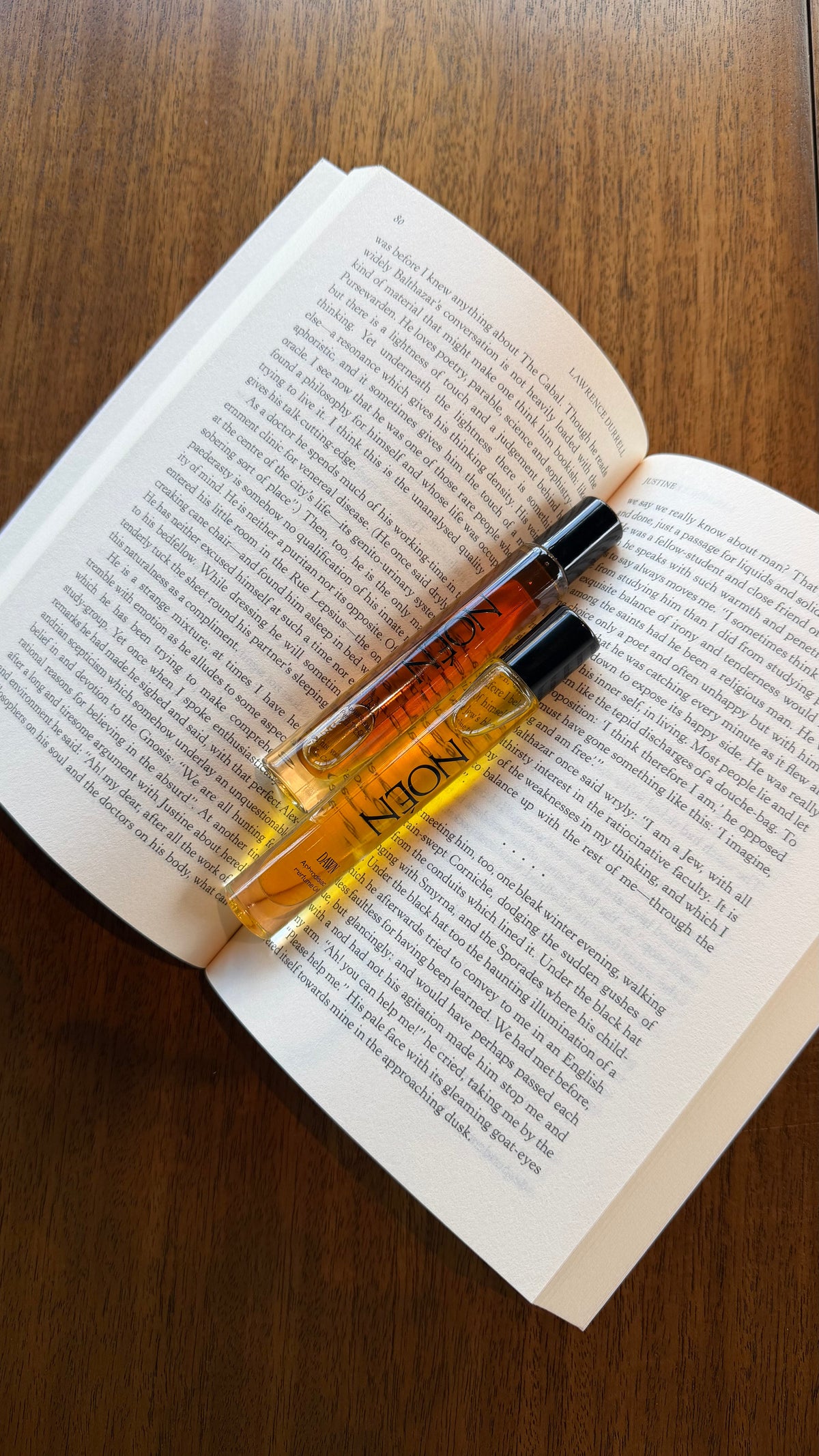
Thirty-three books arranged not by author or era but by hour: the approach, the event, and what's left in the room afterwards. From the Song of Songs to Garth Greenwell, with a detour through the o...
Cleopatra's rituals were never vanity. They were self-reverence — and a working method. Four practices for romancing yourself: raw desire, unfilled time, a signature scent, and the daily anointing.