
Nov 05, 2026
Not in the Mood...Yet
You love the way they smell, the familiarity of their hands, the way they look at you. And yet, when the moment comes you don’t feel desire. So you wonder: if I’m attracted to this person why don’t I feel like touching them now?
Two ways into desire
We have inherited this particular idea that desire should arrive effortlessly, that attraction alone is enough to set the body in motion. But desire doesn’t always works that way and the absence of a sudden urge doesn’t necessarily tell you anything about the depth of your attraction to someone.
Sometimes, desire arrives before touch. Sometimes, it takes shape through it. This is why sexual desire is often described in two pathways: spontaneous and responsive. In other words: the spark and the slow burn. The first is the one that culture treats as the default, the one movies love to show, appearing seemingly out of the blue. A passing glance, a memory of a previous encounter, a thought about someone, and suddenly you are in the mood.
Responsive desire is quieter. Rather than appearing spontaneously, it begins with context and unfolds in response to something. It can be a kiss, a moment of intimacy, a certain kind of touch… You might begin an evening without any particular interest in sex. Then you find yourself leaning into a kiss. Then you become aware of the warmth of another body, the small shift in your own breathing… And something begins to change.
What wasn’t there at the beginning starts to emerge.
How desire takes shape
Responsive desire is really well documented in sexual health research. A 2012 study published in The Journal of Sexual Medicine found that desire often follows arousal instead of preceding it. In the experiment, people who read an erotic story or imagined an encounter with someone attractive reported more desire in the moment than people who were given a neutral task.

The same study also found that context can either open desire or quiet it. General research on the topic adds that fatigue, stress, emotional tension and the tone of the moment all shape how much desire we feel, as well as hormonal changes, medication and the dynamics of a relationship. Less tangible things, like feeling watched or believing that you need to respond in a particular way, also influence desire: anxious or tense scenarios tend to bring less of it than warm, positive ones.
This matters more than it seems, because desire needs room to grow and a full mind rarely has any room, nowadays. You can spend an entire day responding to emails, making decisions, caring for other people, planning what you’ll do for dinner in just a few hours. Even when the day is coming to an end, the mind may continue its quiet inventory of everything that remains unfinished.
Then comes the possibility of intimacy, and an entirely different kind of attention is suddenly expected. But wanting to be close to someone and being ready for sexual intimacy are not necessarily the same thing.
Never the same way twice
Some people experience desire spontaneously, others recognize themselves more in the responsive pattern, and many move between the two, depending on the relationship or circumstances. What draws you closer one day may leave you indifferent the next, what feels inviting in one moment may feel like too much in another.
Desire is not a fixed trait, nor does it follow a single sequence. It is shaped by the body, the mind and the context in which intimacy takes place.
Making room for it, together
When do you feel most available to intimacy? What helps you leave the noise of the day behind? Do you need conversation before touch or silence? Do you feel closer through playfulness or through tenderness? The answers to all of these can be shared.
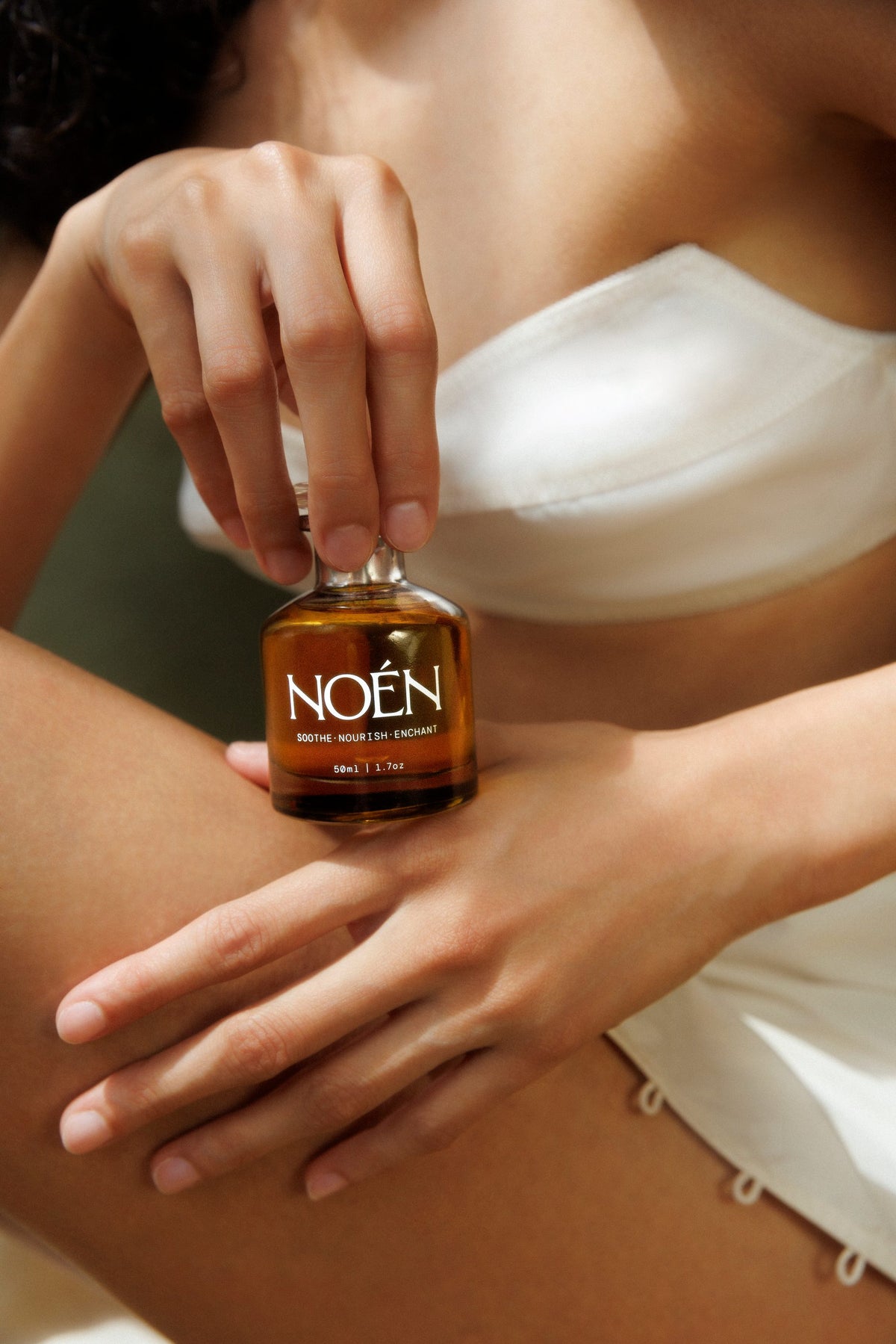
Explaining to a partner that desire doesn't always arrive immediately helps both understand that a slower beginning is not necessarily a rejection. Not every moment of closeness will become sexual, not every kiss will awaken something more. Warming a few drops of Nile Oil between your palms and letting them travel along your partner’s back with no other destination may be enough some days. The skin softens, the pace slows… Desire is not the goal, but it can find you there, fully present, unhurried, free of expectations.
In the end, there isn’t a right formula for creating desire. There will be moments when it doesn't appear, even when everything feels right, and understanding this can change the way we read those moments when desire hasn't arrived yet.