Jul 24, 2026
Cleopatra and the Power of Scent
RECLAIMING THE LOST RITUAL OF SCENT
What if your presence was felt long before you ever arrived?
Historical archives suggest that when Cleopatra sailed to Tarsus to meet the Roman general Mark Antony, she ordered the sails of her royal barge to be drenched in perfumed unguents so dense that the coastal winds carried her scent miles ahead of her ship, announcing her arrival long before her silhouette broke the horizon.
Everyone on that shoreline smelled Cleopatra coming. For her, fragrance was a physical breath of authority, an instrument of quiet dominance, a way to claim a space and a gesture to honor the self.

SCENT WAS NEVER MEANT TO FLOAT IN THE AIR
As early as 3,000 BC, Egyptian priests were doing something unprecedented: turning scent into a formal discipline.
Egypt's first perfumers occupied a singular position at the intersection of medicine, alchemy and spiritual authority. They were not mere artisans: they were highly respected figures within society who understood the therapeutic properties of botanicals and the delicate equilibrium needed to harmonize body and spirit.
Blending aromatic oils with a mastery that modern perfumers still study and admire, these skilled scent makers held knowledge sacred enough to be kept strictly within priestly schools. Techniques and formulations were passed down through oral tradition or guarded as secrets in medical papyri and ancient texts. Some of those formulas have survived and reached us almost intact…
Among the most celebrated creations was Kyphi, the evening incense, usually burned at dusk. Requiring more than 16 ingredients, including myrrh, frankincense and honey, its preparation was itself an intricate multi-day craft. But many other incenses, perfumes and ointments were crafted. In fact, for every layer of life in ancient Egypt - from religious ceremonies to burial rituals, for grooming and personal self-care - there was a specific scent embedded in symbolism.
Back then, resins like myrrh and frankincense were so deeply venerated and scarce that they were frequently used as currency. They were burned over glowing embers because the Egyptians believed that the rising smoke carried human intentions straight to the heavens while simultaneously purifying the air of the living. Through fragrance, the ancients were able to communicate between the earthly and the divine - which is why so many temples housed their own laboratories, where unguents were prepared under priestly supervision.
So vital was this olfactory artistry that pharaohs and high priests were entombed with alabaster jars of precious oils to fulfill their needs in the afterlife. And when those sealed chambers were finally opened to modern light, the air still held the scent of a three-thousand-year-old resin.
BEYOND THE SPRAY: THE UNGUENT
Today we spray fragrance into the air and watch it disappear. But to the Egyptians, a scent that evaporated within hours would have been considered a failure of craftsmanship. They never separated scent from skin: there was no liquid spray, no distance, no invisible cloud projecting outward. Scent was made to last.
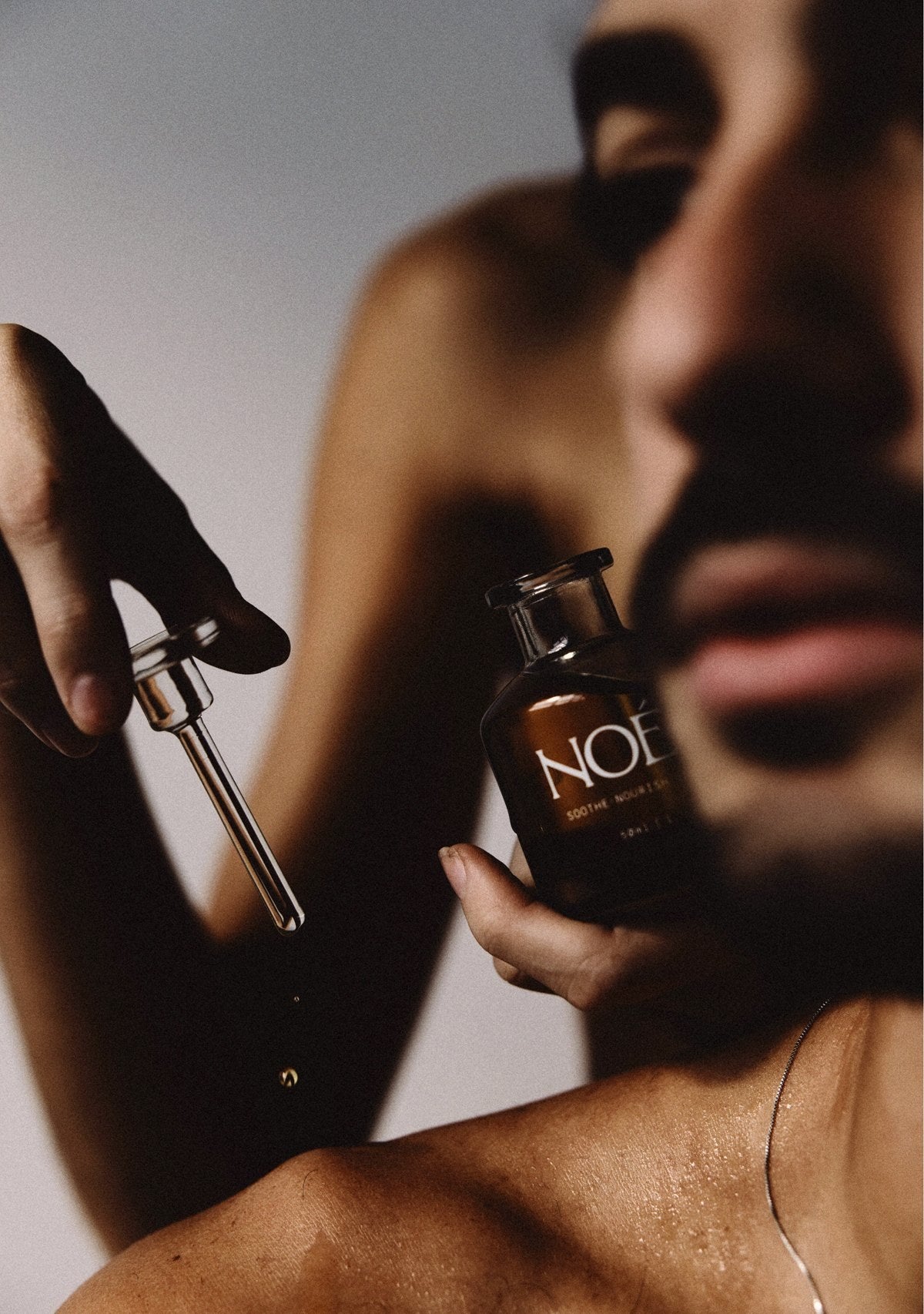
Egyptian scents were dense, tactile, alive. They relied on stable plant-oils like moringa - which is at the heart of our signature Nile Oil - because of its extraordinary stability in extreme desert heat and its capacity to preserve the integrity of every aromatic compound pressed into it. It was into these oils that perfumers steeped flowers, roots, resins and spices through long maceration, sometimes over weeks, creating fragrant unguents designed to fuse with the skin, releasing layered notes as the body heated up throughout the day.
The end result was a perfume like no other. A perfume that smelled different on every person who wore it. Something so personal it could not be fully replicated.
THE RITUAL OF ANOINTING
Cleopatra didn't spritz. She anointed.
Starting from the feet upward, culminating at the pulse points where body heat would carry the scents, the act of anointing was the cornerstone of ancient Egyptian tradition. Oils were pressed into skin as rite, not routine: as the oil sank into the pores, it bonded with body chemistry, shifting, deepening and becoming more intimate as the hours passed, lingering for days.
The last queen of Egypt made these oil-based unguents central to her identity. This was never about self-adornment. This was pure self-devotion, a way to draw a clear boundary between the harshness of the outside world and the quiet authority of one's own body. Far from inheriting this practice passively, she maintained a private laboratory near Alexandria, testing blends of blue lotus and rare resins to formulate compositions that served a single purpose: to mark her presence as absolute.
PERFUMED OILS, MODERNIZED
 Spray replacing touch. Routine replacing ritual. Over centuries, perfumery expanded outward to fill rooms and scent became a simple fleeting mist. Our first fragrance study stands against this shift, seeking to restore that ancient philosophy of perfume as a tactile composition that inhabits the skin.
Enter Dawn and Eros: two aphrodisiac Perfume Oils, one intimate experience. Slow scents for a fast-paced world, built on the same foundational logic as the anointing ritual of oil to skin.
-
Dawn opens softly with jasmine and rose, giving way to neroli, frankincense and a quiet base of wood, earth and spice.
-
Eros begins with a flicker of bergamot before pulling into something deeper: amber resin, velvet musk, blue lotus, vanilla-dark woods.
Each formula is housed in a pocket-sized glass bottle topped with a stainless-steel rollerball, allowing you to trace your pressure points with intention. As the scented oil glides over your wrists, neck and collarbones, it warms against your skin, maturing over time.
Crafted in small batches, our first collection of Perfume Oils is now open for pre-order. This is an invitation to rediscover the power of scent. Just pause. Claim the moment. Honor the body.