Aug 19, 2026
A Noén Reading List
There is a particular kind of book that is not about sex, exactly, but about everything pressed up against it. The half hour before. The look held slightly too long across a table. The afternoon afterwards, when the light has changed and nobody has said anything yet.
These books understand that desire is mostly not the event. It is the approach and the residue — the humid hours on either side, where the real weather happens. Novelists have always known this better than anyone. They know that a hand on a wrist can carry more heat than a whole chapter of bodies, and that what lingers is rarely the act itself but the smell of a room, the particular quality of afternoon light through shutters, the taste of a peach eaten too fast.
We have arranged this list by hour rather than by author or era. Not what happens, but when.

I. Before
Longing, and the discipline of not yet.
Call Me by Your Name — André Aciman Six weeks in Liguria, most of it spent not touching. Aciman is the great modern novelist of anticipation; he can spend forty pages on a boy deciding whether to knock on a door and make it unbearable. The famous scene is not the famous scene. The famous scene is the swimming.
The Age of Innocence — Edith Wharton Nothing happens. That is the point, and it is devastating. Wharton understood that a society organised entirely around restraint produces the most concentrated desire imaginable — an entire life redirected by a glimpse of the back of someone's neck.
Bonjour Tristesse — Françoise Sagan Written at eighteen, and it shows in the best way: sun-drunk, amoral, entirely certain of itself. A summer on the Riviera where a teenage girl decides to ruin something beautiful because she can. The heat comes off the page.
Their Eyes Were Watching God — Zora Neale Hurston Janie under the pear tree, watching bees work the blossoms, understanding for the first time what her own body is for. It may be the finest description of sexual awakening in American literature, and there is not a single body in it.
Swimming in the Dark — Tomasz Jedrowski Poland, 1980. Two young men, a lake, a summer, and a political system that makes every choice a betrayal of something. Restraint here is not decorum — it is survival.
II. During
The heat itself, and its various temperatures.
Delta of Venus — Anaïs Nin Written for a dollar a page, for a collector who kept asking her to leave out the poetry. She left in the poetry. The result is the founding document of literary erotica, and still the most stylish.
Little Birds — Nin's companion collection, stranger and sadder than Delta, more interested in loneliness than pleasure. Read it second.
Tropic of Cancer — Henry Miller Ravenous, filthy, exhausting, occasionally magnificent. Miller wrote about Paris the way a starving man writes about food, and the book was banned for thirty years in the country that produced him. Some of it has aged badly; the appetite hasn't.
A Sport and a Pastime — James Salter Prose so controlled it seems to hum. A young American and a French girl in provincial hotel rooms, narrated by a man who admits he is inventing most of it. Salter's sentences are the reason writers still read this one with envy.
Story of O — Pauline Réage Written by a woman to prove to her lover that a woman could write it. Cold, formal, disquieting, and impossible to argue with as a piece of construction. It has been fought over by every generation of feminists since, which is a mark of how much is actually in it.
Lady Chatterley's Lover — D.H. Lawrence The book that broke the obscenity laws in Britain and made the phrase "would you let your wife or servant read it" permanently absurd. Lawrence is unfashionable now, but nobody has bettered him on the specific tenderness of two bodies in a hut in the rain.
Cleanness — Garth Greenwell The most serious contemporary writer of sex in English. Greenwell insists that what happens between bodies is worth the same descriptive care as anything else — grief, weather, a childhood — and the result is fiction of enormous moral seriousness that is also extraordinarily hot.
III. After
The residue. What is left in the room.
The Lover — Marguerite Duras Fifteen years old on a ferry crossing the Mekong, remembered by a woman in her seventies. The entire novel is aftermath — the affair is over before the first page, and Duras writes it in fragments, like something recovered rather than told.
The Unbearable Lightness of Being — Milan Kundera Sex as philosophy, philosophy as sex, and a dog called Karenin who will break you. Kundera on the difference between love and its imitations remains unsurpassed.
Giovanni's Room — James Baldwin A rented room in Paris, and a man who cannot admit what he wants until it is far too late. Baldwin wrote this at thirty-two and it is close to perfect. The last twenty pages are among the hardest and best in American fiction.
Tender Is the Night — F. Scott Fitzgerald Fitzgerald's saddest and most adult book, about the slow transfer of vitality from one person in a marriage to the other. The Riviera has never looked more beautiful or meant less.
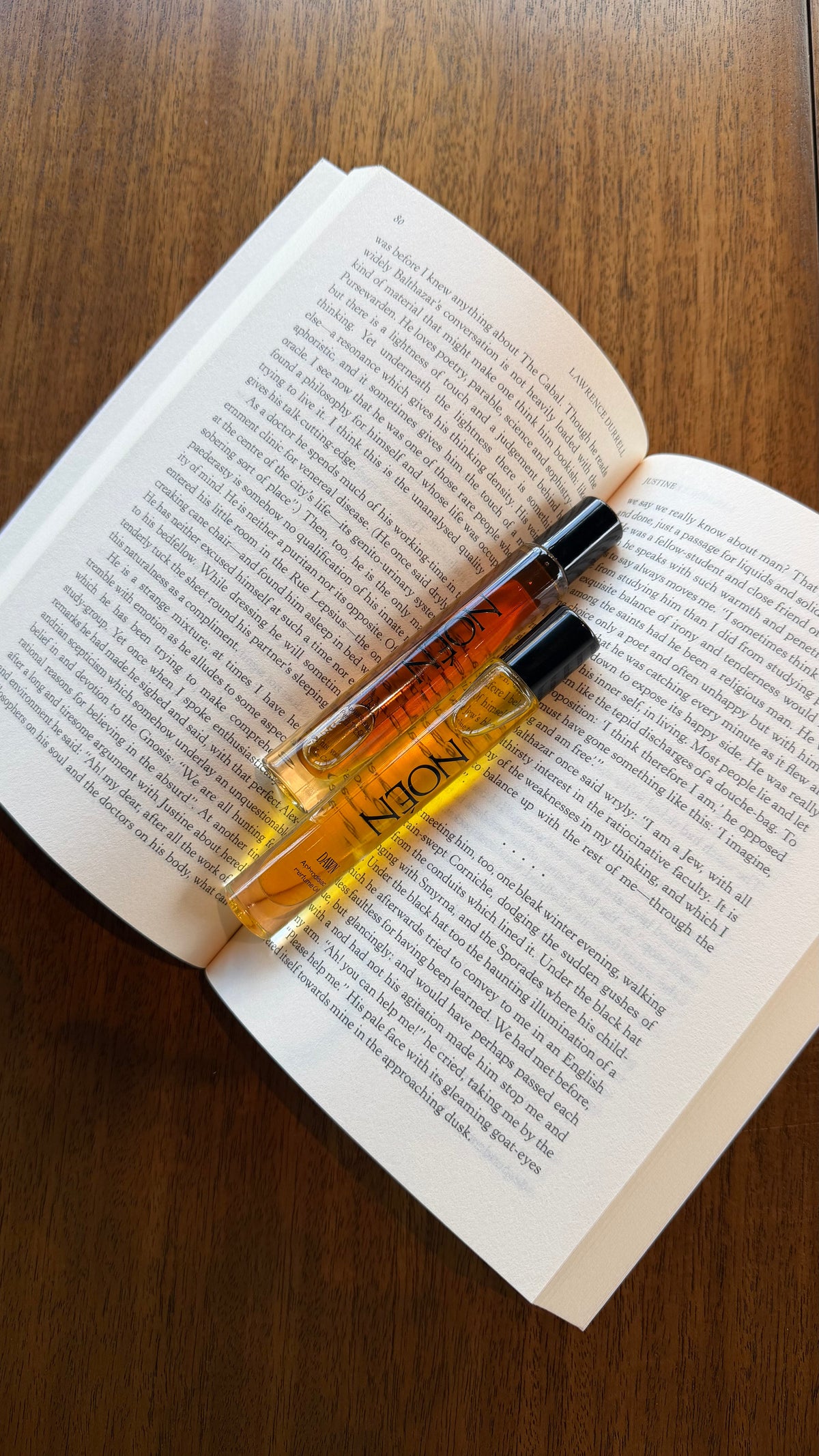
Justine — Lawrence Durrell Alexandria between the wars: a city of five races and five languages, described by Durrell as a winepress of love. Every character is in love with the wrong person and the city is complicit. The first volume of The Alexandria Quartet, and the one to start with — the other three retell the same events from different angles, which is either thrilling or maddening depending on your patience.
The Sheltering Sky — Paul Bowles A marriage disintegrating across North Africa. Bowles is the great novelist of what happens when Western people go somewhere that does not care about them. Cold, immaculate, terrifying.
Wide Sargasso Sea — Jean Rhys The first Mrs Rochester, given a childhood, a Caribbean, and a reason. Rhys writes heat and humidity better than almost anyone, and the erotic charge here is inseparable from ruin.
The Flamethrowers — Rachel Kushner Motorcycles, salt flats, the New York art world, Italian radical politics. Kushner writes desire as velocity — the pull toward speed and the pull toward people turn out to be the same appetite.
Written on the Body — Jeanette Winterson A narrator whose gender is never specified, cataloguing a lover's body part by part after losing her. It reads as an anatomy textbook rewritten as grief, and it is one of the few books that makes the body strange again.
IV. The Senses
Books that are less about desire than about the equipment we experience it with.
The Song of Songs The oldest erotic poem in the Western canon, and the strangest thing in the Bible — an unembarrassed dialogue between two lovers, thick with spikenard, myrrh, saffron, cinnamon and aloes. Everything we make sits somewhere downstream of this text. Read it in the King James for the music, or Ariel and Chana Bloch's translation for the sense.
Perfume: The Story of a Murderer — Patrick Süskind An eighteenth-century Parisian born with no scent of his own and a supernatural nose, who becomes a perfumer and then something much worse. The most sustained attempt in fiction to render smell in language, and the book that anyone working with scent eventually has to reckon with.
In Praise of Shadows — Jun'ichirō Tanizaki A short essay on lacquerware, candlelight, gold leaf in dim rooms, and the aesthetics of things half-seen. Not erotic at all, and yet entirely about how atmosphere acts on a body. Read it in one sitting, at night, with the overhead lights off.
The Bloody Chamber — Angela Carter Fairy tales rewritten as adult, gothic, fur-and-velvet things. Carter's prose is deliberately overripe — she wants you to feel the texture of every fabric — and the title story remains the best argument that horror and desire are made of the same material.
The Vegetarian — Han Kang A woman stops eating meat and her body becomes a battleground for everyone around her. Han writes flesh — its wants, its refusals, its terrible visibility — with a clarity that is difficult to sit with and impossible to forget.
Memoirs of Hadrian — Marguerite Yourcenar An emperor at the end of his life, writing to his successor about power, mortality, and the boy he loved and lost. Yourcenar spent decades on this, and the sentences have the weight of carved stone. The most grown-up book on this list.
Also worth your time
The Awakening — Kate Chopin. 1899, and still shocking in its refusal to punish its heroine on the terms the era demanded.
Fear of Flying — Erica Jong. Loud, funny, and historically enormous — it gave a whole generation of women permission.
Luster — Raven Leilani. The best debut of recent years on desire, humiliation, and the specific indignity of being twenty-three.
Nightwood — Djuna Barnes. Difficult, hallucinatory, and worth every reread. T.S. Eliot wrote the introduction and even he seemed slightly frightened of it.
Three Women — Lisa Taddeo. Eight years of reporting on the interior lives of three American women. Non-fiction that reads like the most intimate novel you have ever been handed.
The Pisces — Melissa Broder. A woman falls in love with a merman in Venice Beach. Somehow this is the funniest and bleakest book on the list.
Noén is a New York company making botanical oils for body, hair, and the space between. Our Volumes are published twice yearly.